By Attorney Michael Goldstein – Small Business & Debt Relief Lawyer | Massachusetts Editorial Team · Updated 2026-07-14
Massachusetts small business owners facing IRS debt have several settlement paths available. An Offer in Compromise lets owners settle tax debt for less than the full amount owed. The IRS evaluates ability to pay, income, expenses, and asset equity. Attorney Michael Goldstein provides IRS tax workout solutions for Massachusetts small business owners.
What IRS Settlement Options Exist for Massachusetts Businesses?
Massachusetts small business owners facing IRS debt have several legitimate legal paths to resolve what they owe. And some options allow settlement for less than the full balance. Ignoring IRS debt accelerates penalties and enforcement action, making early intervention critical.
How to settle IRS debt for less is the central question for most business owners in this position. The four primary options are:
- Offer in Compromise (OIC) — settle the total debt for a reduced amount
- Installment agreements — pay the balance over time in structured monthly payments
- Penalty abatement — request removal of penalties when qualifying circumstances exist
- Currently not collectible status — temporarily pause IRS collection when a business cannot pay without severe financial hardship
How Does the IRS Decide Whether to Accept an Offer in Compromise?
The IRS approves an OIC when the amount offered represents the most the agency realistically expects to collect within a reasonable period. Four factors drive that determination: the taxpayer’s ability to pay, total income, monthly expenses, and asset equity. A business owner with limited assets and thin cash flow presents a stronger OIC case than one with significant equity.
Is an OIC the Right First Step for Every Massachusetts Business?
Not necessarily. The IRS expects business owners to explore all other payment options before submitting an OIC. Attorney Michael Goldstein, a Massachusetts-licensed attorney serving small business owners across the state, evaluates each client’s full financial picture to identify which resolution path fits. Whether that is an OIC, an installment agreement, or another recognized relief option.

Why Is Unresolved IRS Debt Dangerous for Massachusetts Owners?
Unresolved IRS debt puts Massachusetts small business owners at serious legal and financial risk. The Internal Revenue Service aggressively enforces tax laws nationwide. The authority to impose serious penalties means consequences arrive fast, often faster than owners expect.
Economic pressures like inflation and rising operating costs push many Massachusetts entrepreneurs into a difficult position: which bills get paid first? Tax payments fall behind. That delay triggers a chain reaction that goes far beyond a simple late fee.
What Happens When a Massachusetts Business Falls Behind on Taxes?
The consequences of unpaid tax obligations extend well beyond minor penalties. The IRS holds broad enforcement powers, and Massachusetts business owners who delay action face compounding interest, escalating penalties. Potential collection actions against business assets.
Why Does Waiting Make the Problem Worse?
Every month without resolution adds to the total balance owed. The IRS does not pause enforcement while a business owner weighs options, the agency moves forward regardless.
The core dangers Massachusetts owners face include:
- How to Settle IRS Debt for Less becomes harder the longer the balance grows
- Penalties and interest compound on the original unpaid amount
- IRS enforcement actions can disrupt daily business operations
- Delayed action narrows the range of available resolution options
Attorney Michael Goldstein serves Massachusetts small business owners navigating IRS debt, providing legal strategy before enforcement actions close off the best paths forward.
How Should Massachusetts Owners Choose the Right Settlement Path?
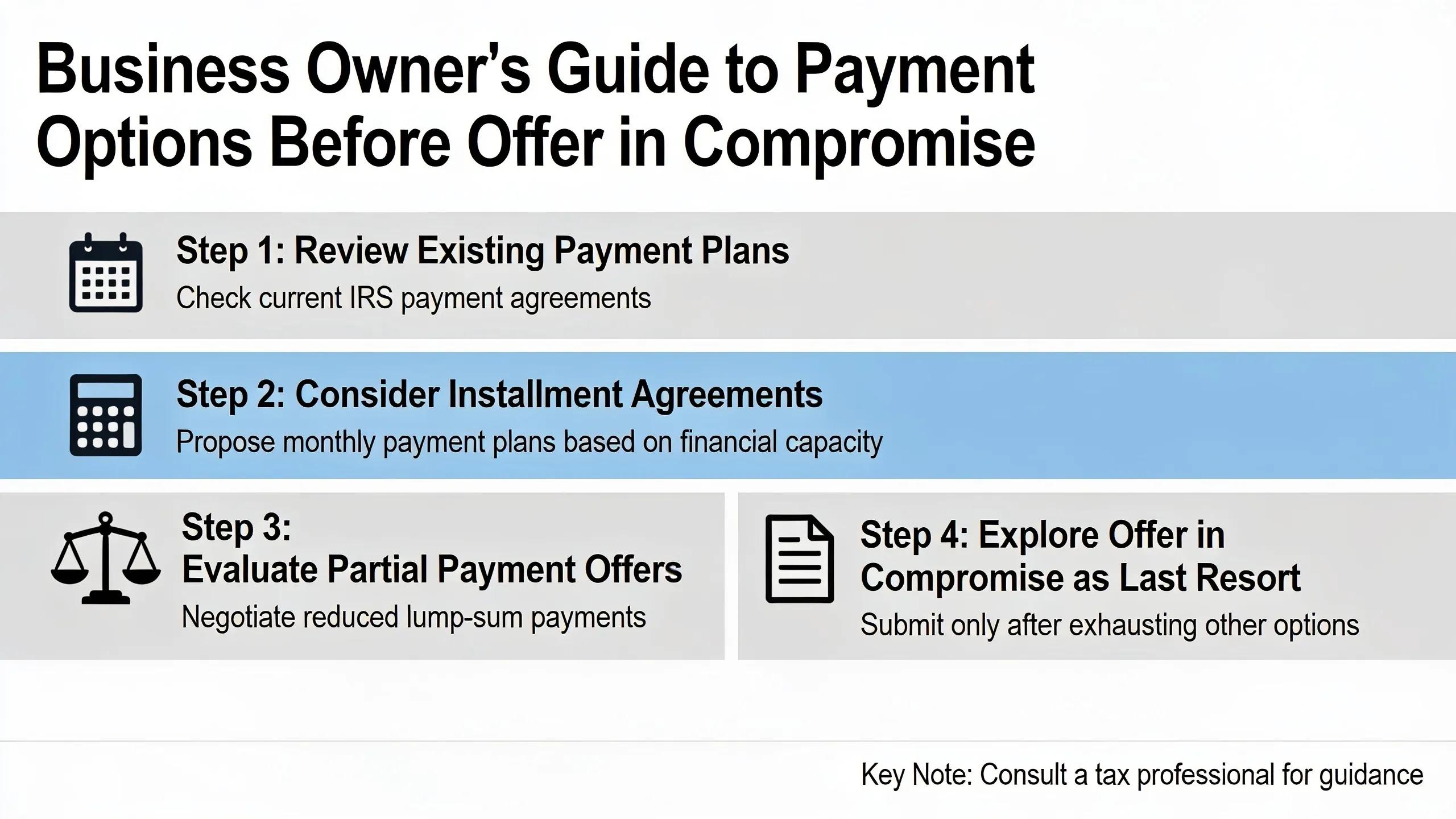
Massachusetts small business owners should evaluate every available IRS payment option before committing to a specific resolution strategy. Choosing the wrong path wastes time, money, and negotiating leverage.
Is an Offer in Compromise Right for Every Business Owner?
Not every Massachusetts owner qualifies for an Offer in Compromise. The IRS program that allows taxpayers to settle debt for less than the full amount owed. The IRS itself states the program is not appropriate for everyone. Owners should exhaust other payment options, such as installment agreements or currently-not-collectible status, before submitting an offer.
How to Settle IRS Debt for Less Without Making Costly Mistakes?
The path to settling IRS debt for less depends heavily on a business owner’s specific financial picture. Income, expenses, assets, and ability to pay. One critical step many owners overlook: carefully verifying the qualifications of any tax professional hired to navigate the process. Unqualified representation leads to rejected offers and deeper financial exposure.
Massachusetts owners benefit from working with strategy-focused legal counsel rather than generic tax preparers. Attorney Michael Goldstein helps Massachusetts small business owners evaluate the right IRS resolution path, matching each client’s circumstances to the settlement option most likely to succeed.

- Can bankruptcy stop a lawsuit, judgment or bank levy in Massachusetts? - October 5, 2026
- What happens if I miss a Chapter 13 payment in Massachusetts? - September 27, 2026
- How long after the Meeting of Creditors will I get my Chapter 7 discharge in Massachusetts? - September 21, 2026


